NDT Inspections
Non-destructive testing and structural integrity services for concrete, industrial and infrastructure applications in Houston and Dallas, Texas.
How it works.
Non-destructive testing (NDT) is a collection of analysis techniques used to evaluate the properties of materials, components and structures without causing damage. Unlike destructive testing methods, NDT allows engineers to assess structural integrity, detect internal defects and verify material quality while leaving the structure fully intact and operational.
OmniVueNDT's NDT services utilize acoustic and ultrasonic wave-based methods to evaluate concrete, masonry, wood and metal structures. By introducing controlled energy into a structure and measuring the response, our technicians can identify voids, cracks, delamination and other anomalies that are not visible from the surface. OmniVueNDT deploys Pile Integrity Testing (PIT), Impact Echo (IE) and Ultrasonic Pulse Velocity (UPV) depending on project requirements and the type of structure being evaluated.
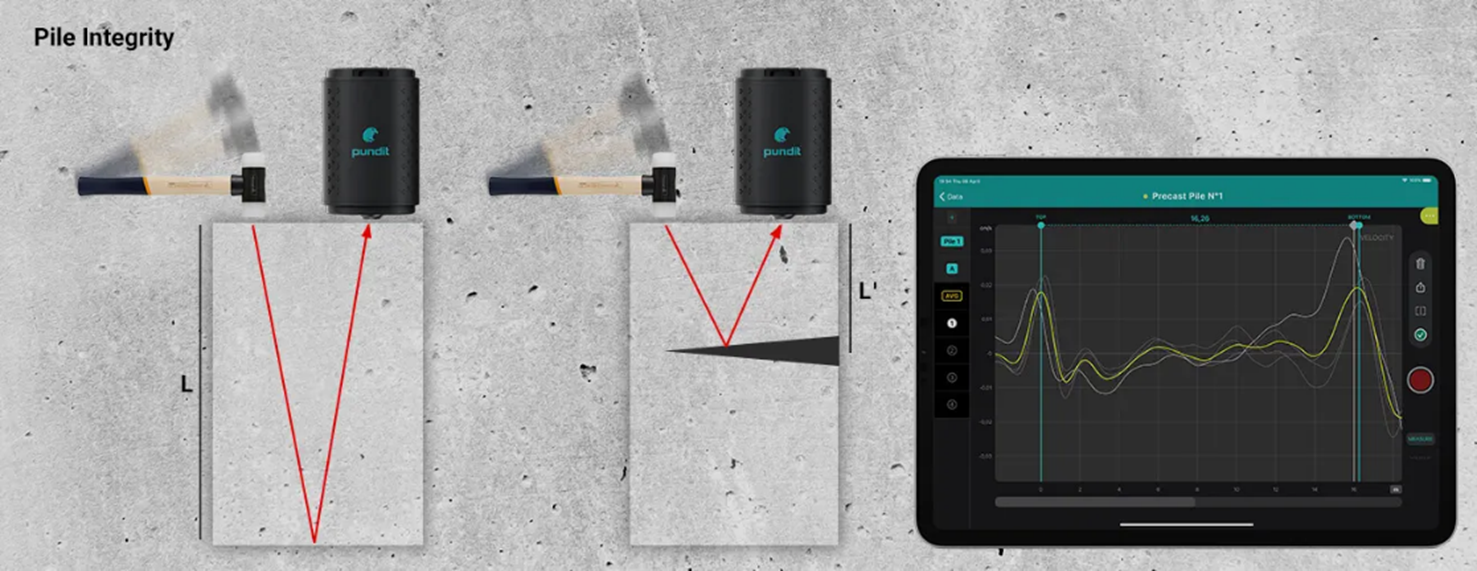
OmniVueNDT's non-destructive testing services include Pile Integrity Testing (PIT), Impact Echo (IE) and Ultrasonic Pulse Velocity (UPV) to ensure the integrity and quality of various structural components. PIT evaluates the soundness of vertical or inclined piles by measuring the velocity response induced by an impact device, making it ideal for forensic evaluations and quality assurance in new construction. IE assesses the condition and thickness of structural members like slabs, beams and walls by detecting voids, cracks and honeycombs, with the advantage of requiring access to only one side of the structure. UPV identifies and maps internal defects in materials such as concrete, wood and masonry by analyzing compressional waves, offering comprehensive insights into the volume and extent of the damage. Together, these methods provide reliable assessments to ensure the safety and durability of your structures.
Applications
-

PIT — Pile Integrity Testing
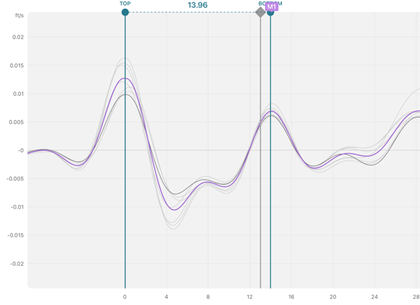
Pile Integrity Testing evaluates the soundness of vertical or inclined piles by measuring velocity response induced by an impact device. Commonly used for forensic evaluations of existing piles and quality assurance in new construction.
-

Impact Echo (IE)
Impact Echo investigations assess the condition and thickness of concrete structural members including slabs, beams, columns, walls, pavements and tunnels. The method detects voids, honeycomb and cracks and requires access to only one side of the structure.
-

UPV — Ultrasonic Pulse Velocity
Ultrasonic Pulse Velocity testing identifies and maps internal defects in concrete, wood, masonry, stone, ceramics and metal materials. UPV tests are also used to predict the strength of early age concrete and assess the volume and extent of damage within a structure.